A blood pressure monitor may appear to be a simple combination of a display and cuff, but commercial production involves coordinated pneumatic, electronic, mechanical, and software systems. For medical-device brands, distributors, importers, and private-label buyers, understanding how the product is built supports better supplier evaluation, specification planning, and product-line positioning. This manufacturing overview explains the main materials, components, assembly stages, calibration controls, and configuration decisions behind a digital blood pressure monitor, with particular attention to the factors that affect B2B sourcing and OEM development.
How a Blood Pressure Monitor Converts Cuff Pressure into Data
Most automatic upper-arm devices use an oscillometric measurement structure. An air pump inflates the cuff while a valve controls airflow, and a pressure sensor detects changes inside the pneumatic circuit. The sensor output is conditioned and converted into digital data before the device algorithm calculates and displays systolic pressure, diastolic pressure, and pulse information. This architecture means the performance of a blood pressure monitor depends on the interaction of the cuff, pump, valve, sensor, circuit board, firmware, and mechanical housing rather than on one component alone.
The pneumatic system creates controlled pressure, while the electronic system separates useful pulse oscillations from background noise. Signal filtering, amplification, analog-to-digital conversion, and algorithm processing take place before results reach the LCD or connected application. Movement indicators, cuff-fit prompts, memory, voice guidance, backlighting, and Bluetooth connectivity are secondary functions built around this core measurement path. For buyers, the practical question is not simply whether a blood pressure monitor contains these functions, but whether the complete architecture has been developed, assembled, and tested as one controlled system.
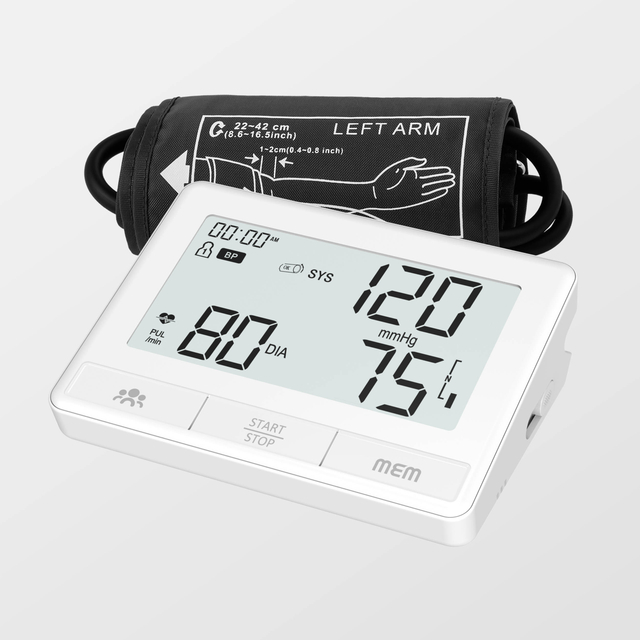
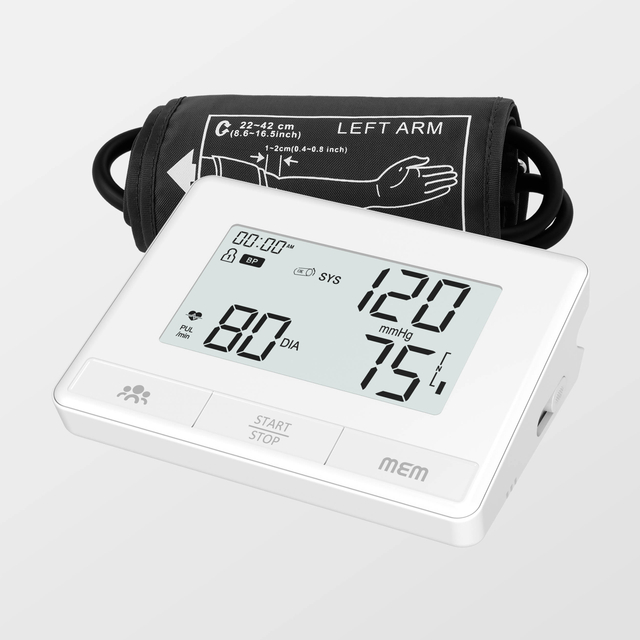
A conventional connected model such as the Bluetooth Arm Blood Pressure Monitorkeeps the monitor body and cuff separate through an air tube. Its configuration includes Bluetooth connectivity, a 22–42 cm cuff, a large display, dual-user memory, and optional voice and backlight functions. This type of platform can suit distributors seeking a recognizable upper-arm format with digital data management and accessible display options.
Materials and Components That Shape Product Reliability
The outer housing of a digital blood pressure monitor is generally produced from molded engineering plastic. The material must accommodate the display window, buttons, battery compartment, PCB supports, pump mounts, and internal airflow connections while remaining suitable for repeated handling. Surface texture, wall thickness, fastening points, and dimensional consistency also affect assembly efficiency and perceived product quality. Joytech controls key plastic and silicone components within its manufacturing operations and uses materials such as ABS and TPE for relevant medical-device parts.
The cuff is a functional assembly rather than a simple fabric band. It commonly combines a woven outer layer, an inflatable bladder, hook-and-loop fastening, printed positioning marks, seams, and an air connection. Material selection influences flexibility, wear resistance, pressure distribution, cleaning expectations, and packaging size. Cuff construction and fit are also relevant to measurement consistency, so procurement teams should review the available circumference range, bladder design, stitching quality, fastening durability, and compatibility with the specified monitor platform.
Inside the main unit, the principal components include the air pump, release valve, pressure sensor, PCB, microcontroller, signal-conditioning circuit, memory, display, buttons, power circuit, and optional communication or audio modules. These parts must operate within a compact enclosure without excessive vibration, leakage, electrical interference, or unstable power delivery. A Bluetooth blood pressure monitor adds a wireless communication module and related firmware, while rechargeable versions require battery-management and charging circuitry. Each added function changes the bill of materials, assembly sequence, firmware workload, testing plan, and target retail position.
Component Area
Typical Materials or Parts
Manufacturing Purpose
B2B Procurement Impact
Housing
Molded engineering plastic, display lens, and button parts
Protects and positions internal assemblies
Affects appearance, tooling, color customization, durability, and packaging
Cuff System
Textile sleeve, inflatable bladder, fastener, and connector
Applies and retains controlled arm pressure
Influences size coverage, replacement strategy, channel positioning, and user guidance
Pneumatic Path
Pump, valve, elastomer tubing, and seals
Generates and controls airflow
Leakage, noise, inflation behavior, and assembly consistency require testing
Electronic System
PCB, sensor, MCU, memory, and display driver
Converts pressure signals into displayed data
Determines functions, firmware scope, component sourcing, and quality controls
Power System
Alkaline batteries or rechargeable lithium battery
Supplies power to the pump and digital circuits
Changes convenience positioning, shipping considerations, accessories, and price tier
Connected Functions
Bluetooth module, application interface, and data memory
Supports digital record management
Adds software compatibility, localization, privacy, and support requirements
For OEM/ODM buyers, component selection should not be evaluated only by function lists. Cuff range, pump stability, sensor consistency, PCB design, power configuration, and Bluetooth requirements all affect product cost, testing workload, certification preparation, and final market positioning.
How the Blood Pressure Monitor Manufacturing Process Works
Component Preparation and Plastic Molding
Production begins with an approved bill of materials, component specifications, drawings, firmware requirements, and inspection criteria. Plastic housing parts are injection molded, trimmed, visually checked, and measured before they enter the assembly line. Buttons, display covers, battery doors, internal brackets, and seals may follow separate tooling and inspection routes. Color matching, logo application, surface finishing, and packaging artwork are introduced according to the OEM specification rather than added informally during final assembly.
Cuff manufacturing follows a different workflow because it combines textile processing with pneumatic requirements. Fabric sections are cut, printed, sewn, and joined with the bladder, fastening material, and air connector. Tube-based products require compatible hoses and plugs, while a tubeless blood pressure monitor integrates the pneumatic path more closely with the cuff and main body. The manufacturer must control dimensions and connection interfaces so that the cuff assembly matches the device configuration selected by the buyer.
Electronics, Pneumatics, and Firmware Integration
Electronic production normally includes PCB assembly, soldering, programming, visual inspection, and electrical testing. The pressure sensor, microcontroller, signal-conditioning parts, memory, power components, display interface, and optional Bluetooth or voice circuits are mounted according to the design. Firmware is then loaded to manage inflation, valve timing, signal processing, data storage, error messages, display behavior, and configured features. Because the pressure signal passes through filtering and amplification before digital processing, component tolerances and circuit performance are important manufacturing controls.
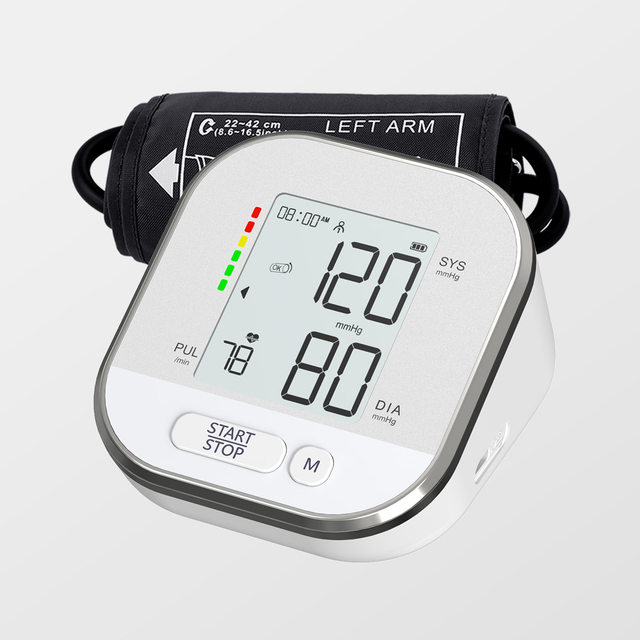
The pump, valve, cuff connection, tubing, and sensor port form the pneumatic assembly. These parts are connected and secured inside the housing, followed by checks for routing, sealing, and mechanical interference. In an integrated-cuff design, the manufacturer has less separation between the enclosure and wearable section, which changes internal layout, tooling, assembly fixtures, and repair access. The Rechargeable Tubeless BP Monitoruses this all-in-one structure with an integrated cuff, a 4.2-inch display, optional Bluetooth and voice functions, dual-user storage, and alkaline or rechargeable lithium power options.
Calibration, Final Assembly, and Packaging
After mechanical and electronic integration, the blood pressure monitor enters calibration and functional testing. Production equipment applies known pressure conditions so the sensor response and system output can be checked against defined limits. Pump operation, valve control, leakage, display segments, buttons, memory, indicators, power behavior, and optional connected functions are also reviewed. Failed units should be isolated for controlled analysis and rework rather than returned to the production flow without documented verification.
Final assembly closes the enclosure and pairs the device with its approved cuff, instructions, accessories, and packaging. Labels and manuals must match the market version, language set, power configuration, and registered product information. Carton design also matters to distributors because cuff size, adapters, storage cases, and rechargeable accessories affect unit dimensions, gross weight, shipping efficiency, and warehouse planning. A manufacturing quotation should therefore define the complete commercial package, not only the electronic unit.
Quality Control and Compliance in B2B Sourcing
A procurement review should examine quality controls at incoming, in-process, and finished-product stages. Incoming inspection can cover plastics, cuff materials, pumps, valves, displays, batteries, electronic components, and printed packaging. In-process controls address PCB operation, firmware version, pneumatic connections, assembly torque, leakage, calibration, and feature configuration. Finished-product inspection then verifies appearance, operation, accessories, labels, and packaging before release.
For OEM/ODM buyers, a reliable blood pressure monitor manufacturer should demonstrate stable process control, component consistency, calibration capability, and documented quality management. Joytech Healthcare supports these requirements through IQC, IPQC, FQC, and OQC procedures, in-house production of key plastic and silicone parts, more than 30 production lines, and quality systems such as ISO 13485 and MDSAP.
Compliance should be evaluated by product model and destination market. Buyers need to confirm which certificates, registrations, reports, labeling requirements, and technical documents apply to the exact configuration being purchased. Bluetooth, rechargeable batteries, adapters, voice functions, applications, and packaging changes may introduce additional documentation or market requirements. Certification names should therefore be reviewed during project definition and should not be treated as interchangeable across every blood pressure monitor version.
Before confirming a blood pressure monitor supplier, buyers should review the manufacturer's calibration process, leakage testing, inspection checkpoints, firmware version control, component traceability, and documentation support for the target market.
Choosing a Manufacturing Configuration for Your Market
Product architecture has direct commercial consequences. A separate-cuff model offers a familiar format and can support different cuff options, while an integrated model creates a compact presentation with fewer external connections. A basic battery-powered blood pressure monitor may suit value-focused retail programs, whereas rechargeable power, large displays, voice functions, extensive memory, and Bluetooth connectivity can support higher product tiers. Buyers should select functions according to channel needs instead of adding every available feature to one SKU.
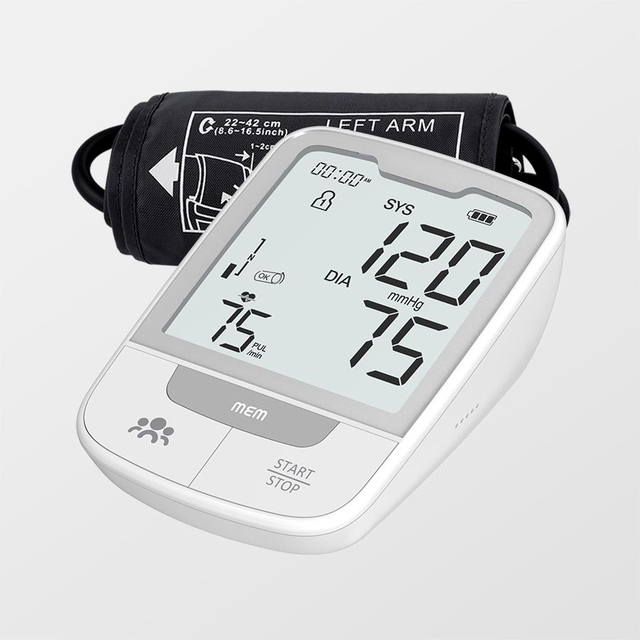
The Bluetooth Tubeless BP Monitorcombines an integrated cuff with oscillometric measurement during inflation, dual-user storage, Bluetooth capability, movement indication, cuff-tightness indication, and battery or rechargeable lithium power options. For a distributor or private-label brand, this configuration can support a compact connected product line alongside conventional tube-based devices. The important sourcing task is to define which functions are standard, optional, localized, or dependent on the final market version.
Joytech Healthcare supports OEM and ODM blood pressure monitor programs for global brands and distributors, including discussions about housing, branding, functions, power options, cuff configurations, displays, packaging, and connected features. Its manufacturing profile includes more than 20 years of medical-device experience, multiple production facilities, and established quality systems. Procurement teams can use the component and process framework above to prepare clearer requests for quotation, compare configuration options, and identify documentation needs before sampling. Buyers may contact Joytech to discuss target markets, product specifications, customization requirements, samples, quotations, and potential manufacturing cooperation.
Conclusion
A well-built blood pressure monitor results from coordinated material control, pneumatic engineering, electronic assembly, firmware management, calibration, and documented inspection. For B2B buyers, understanding these stages makes it easier to compare suppliers, define market-appropriate configurations, and reduce specification gaps before production. Joytech Healthcare is a medical-device manufacturer with OEM and ODM capabilities, established production facilities, and verified quality systems. To discuss blood pressure monitor configurations, private-label requirements, samples, quotations, and long-term manufacturing cooperation, contact sale14@sejoy.com.
FAQ
Q: What are the main parts of a blood pressure monitor?
A: The main parts include a cuff, pump, valve, pressure sensor, PCB, microcontroller, display, power system, housing, memory, buttons, and optional Bluetooth or voice modules.
Q: What materials are commonly used in a blood pressure monitor?
A: Common materials include molded engineering plastics, textile cuff fabric, elastomer bladders and seals, electronic circuit materials, display components, metal contacts, and hook-and-loop fasteners.
Q: How is a digital blood pressure monitor calibrated?
A: Manufacturers apply controlled reference pressures, evaluate sensor and system responses, and check readings against defined production limits before the device proceeds to final inspection.
Q: Does a tubeless design change the manufacturing process?
A: Yes. An integrated cuff changes housing design, internal pneumatic routing, tooling, assembly fixtures, connection methods, leakage checks, packaging dimensions, and service considerations.
Q: What should distributors confirm before ordering an OEM blood pressure monitor?
A: Buyers should confirm the cuff range, power source, display, memory, connectivity, language, packaging, certificates, target market, testing documents, customization scope, and commercial order requirements.