Procurement teams often compare a blood pressure monitor by display size, memory, connectivity, and price, yet those visible specifications tell only part of the sourcing story. The cuff, pneumatic pathway, pressure sensor, control electronics, enclosure, and software operate as one measurement system, so each component can affect fit coverage, service requirements, packaging, and channel positioning. This article explains sphygmomanometer parts from a B2B perspective, helping medical brands, distributors, e-commerce sellers, and institutional buyers evaluate product architecture, configuration options, and supplier discussions more clearly.
Component Architecture Depends on the Measurement Method
A manual sphygmomanometer and an automatic digital blood pressure monitor perform the same general task through different component systems. Manual equipment typically combines an inflatable cuff and bladder, tubing, a hand bulb, an air-release valve, a pressure gauge, and a stethoscope. The operator controls inflation and deflation while identifying Korotkoff sounds. This architecture places greater responsibility on operator technique, gauge condition, pneumatic sealing, and calibration management.
An automated blood pressure monitor replaces the hand bulb, manual valve, gauge reading, and auscultation process with an electric pump, controlled valve, electronic pressure sensor, signal-processing unit, algorithm, and digital interface. Oscillations detected through cuff pressure are processed to estimate and display systolic and diastolic values. For B2B buyers, this means that evaluation should cover not only external features but also the pump system, sensor design, software controls, power source, accessories, and intended application.
Component Area
Manual Sphygmomanometer
Automatic Digital Monitor
B2B Evaluation Focus
Inflation
Hand bulb
Electric pump
Inflation time, noise, and durability
Pressure control
Manual valve
Automatic control valve
Deflation consistency and leak resistance
Pressure detection
Aneroid or mercury gauge
Electronic pressure sensor
Specifications, validation, and calibration controls
Signal interpretation
Trained operator and stethoscope
Embedded algorithm
Intended population and validation documentation
User output
Gauge reading
LCD or LED display
Readability, language, memory, and indicators
Data handling
Usually none
Memory, app, and optional Bluetooth
Channel positioning, privacy, and compatibility
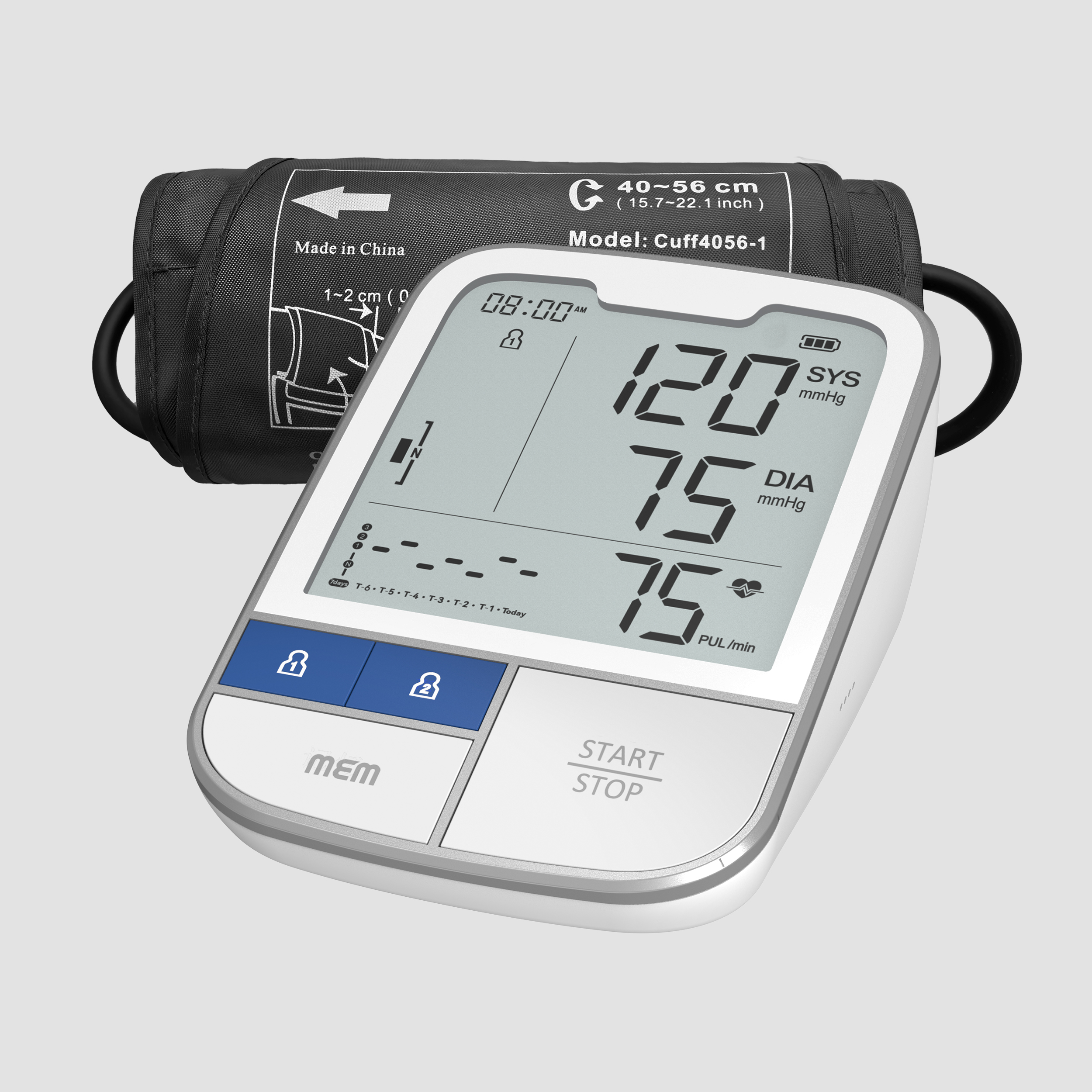
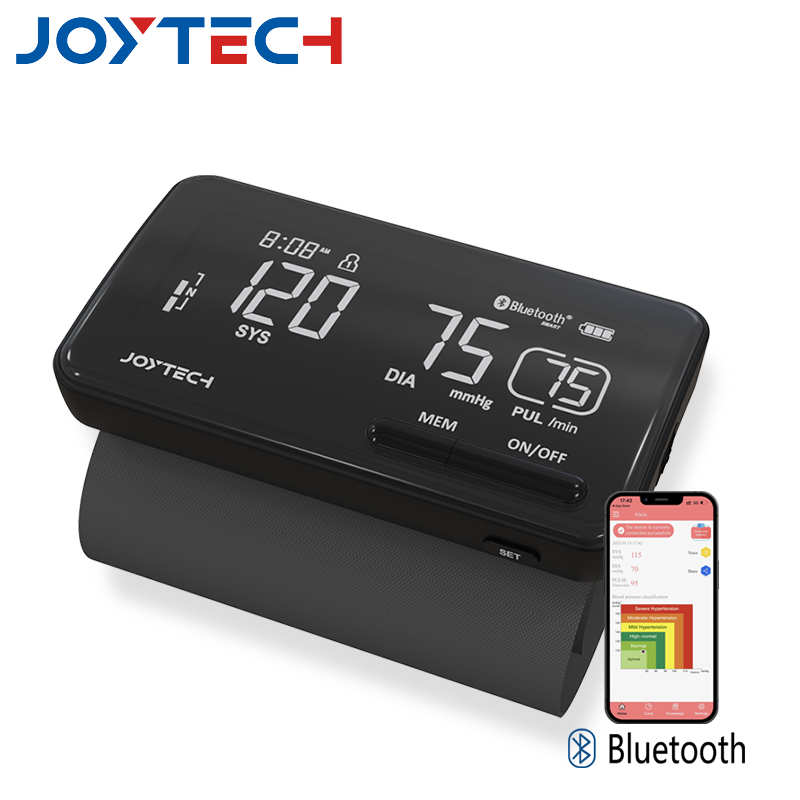
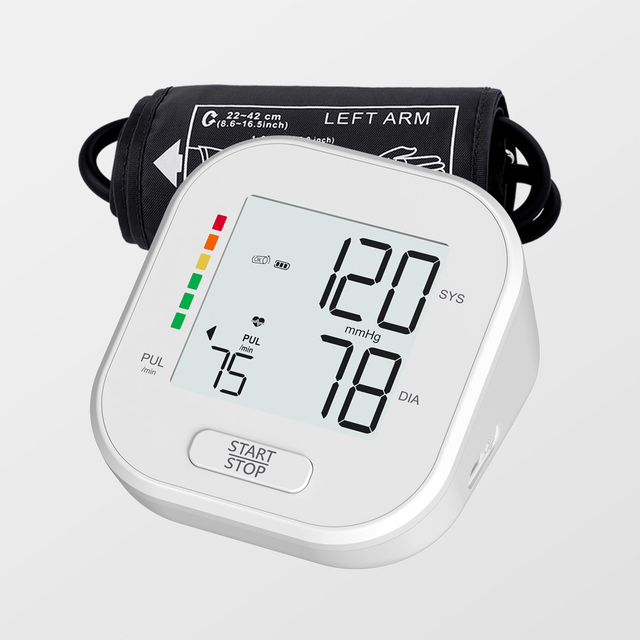
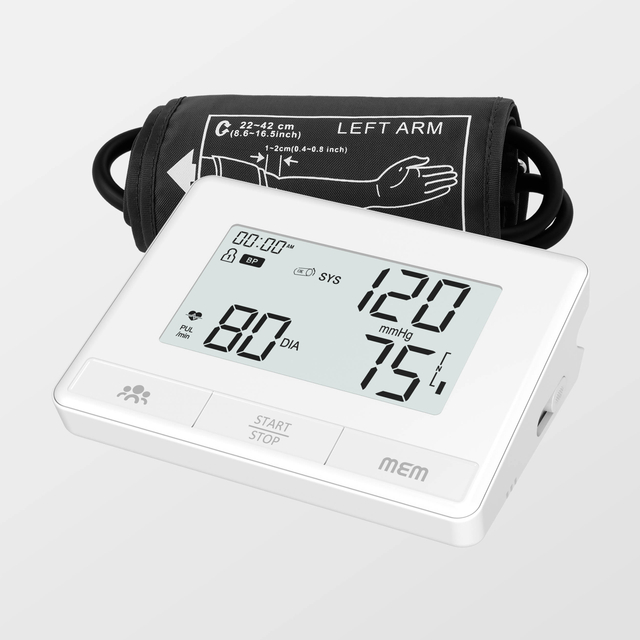
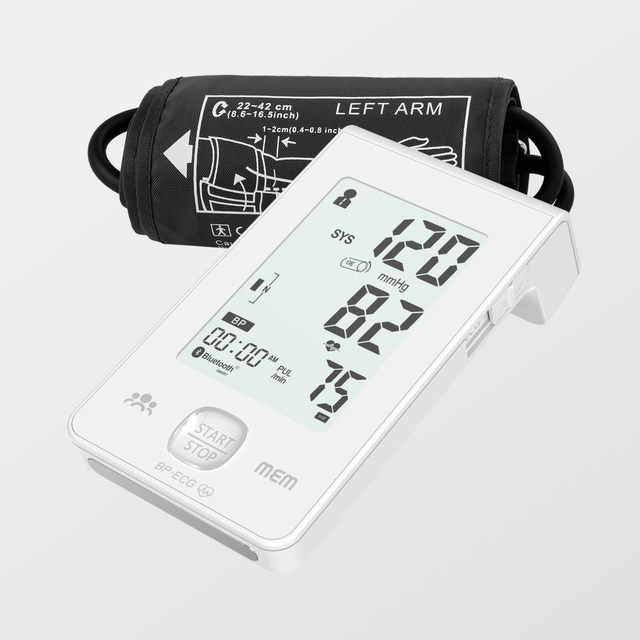
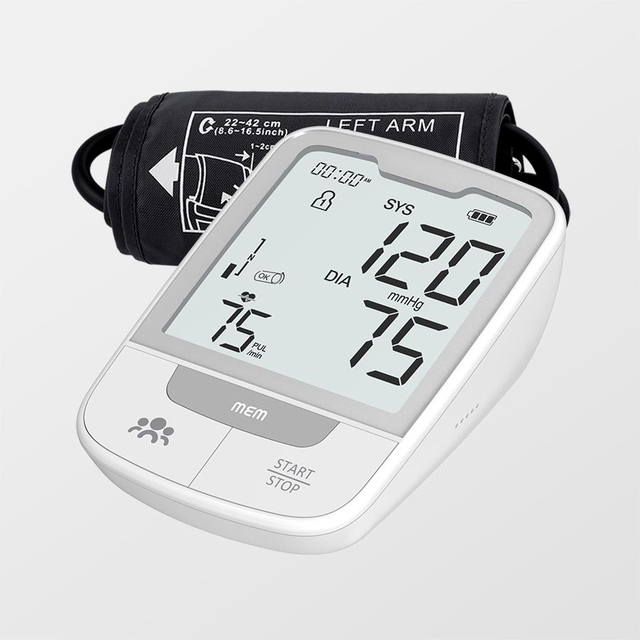
Product architecture also creates different commercial opportunities. A large-display model with connectivity can suit healthcare brands building connected home-monitoring ranges, while a simpler configuration may support price-sensitive retail programs. Joytech’s Bluetooth Upper Arm Monitor combines an upper-arm cuff, large LCD, dual-user memory, irregular heartbeat detection, an AC adapter port, and Bluetooth connectivity. For distributors, these functions create a configurable product position that extends beyond a basic measurement device without changing the core upper-arm format.
The Cuff and Pneumatic Path Control Physical Fit
The cuff is not simply a fabric accessory. It normally includes an outer sleeve, fastening area, placement markings, an inflatable bladder or integrated air chamber, and a hose connection where applicable. Its circumference range determines which users the packaged SKU is designed to accommodate, while its closure design affects application consistency. For procurement teams, cuff coverage should therefore be evaluated alongside the target market, replacement strategy, instruction design, and planned claims rather than treated as a secondary specification.
Incorrect cuff sizing is a recognized source of systematic measurement error, making the stated arm-circumference range commercially significant as well as technically relevant. Brands serving broad adult populations may require standard, large, or extra-large options, but every cuff and device combination should be supported by appropriate documentation. Buyers should ask whether alternative cuff sizes are validated for the selected model, whether connectors are shared across a product family, and whether replacement cuffs will remain available during the intended sales cycle.
The pneumatic path continues from the cuff through the tube, connectors, pump, and valve. Air leakage, tube kinking, poor connector engagement, or inconsistent valve control may interfere with inflation and deflation behavior. In an automatic blood pressure monitor, the pump generates pressure while electronically controlled valves regulate release and emergency deflation. Procurement reviews should cover pressure protection, leak testing, connector durability, pump operating life, and the way error messages are communicated to the operator.
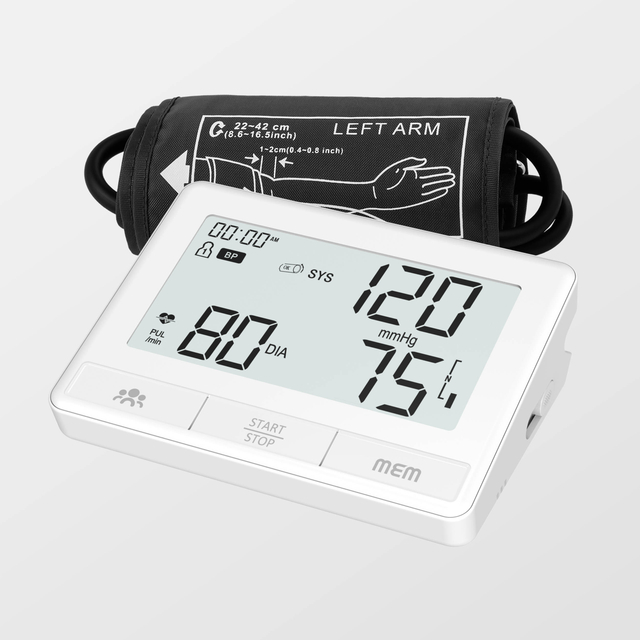
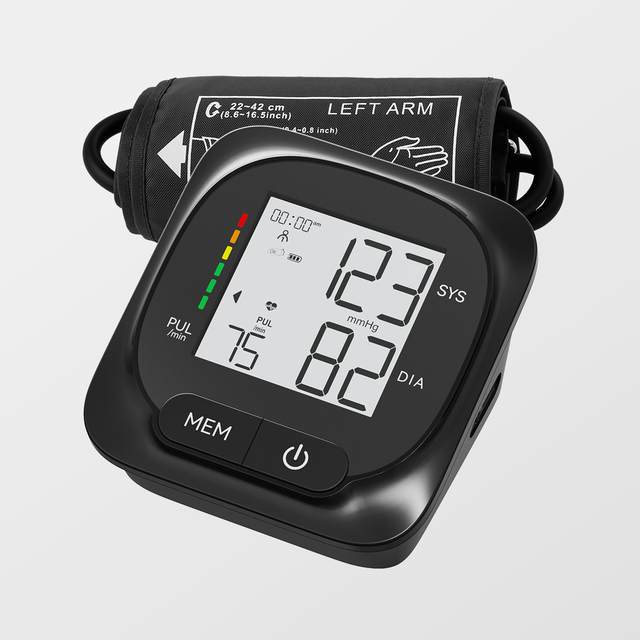
Joytech’s Extra-Large Cuff Monitor is specified with a 22–42 cm included cuff and optional L/XL cuff configurations. It also incorporates cuff-tightness and excessive-movement indicators, measurement during inflation, dual-user memory, and optional Bluetooth, voice, and backlight functions. These choices allow distributors to assess cuff coverage together with interface and connectivity requirements when planning standard and upgraded versions for different channels.
The Measurement Core Converts Pressure into Results
In a manual device, the pressure gauge is the measurement core. An aneroid gauge uses mechanical movement to indicate cuff pressure on a dial, while a mercury system uses the height of a mercury column. Gauge condition, calibration status, dial readability, and mechanical protection influence service planning. Institutional buyers may also need procedures for periodic checks, repair decisions, and removal of damaged equipment from use.
A digital blood pressure monitor uses an electronic pressure transducer instead of a visible mechanical gauge. The sensor converts pressure changes into electrical signals, which pass through signal-conditioning and conversion stages before reaching the processor. Embedded software identifies relevant cuff-pressure oscillations, filters unsuitable signals, calculates reported values, and manages error conditions. Because the final result depends on both physical components and software, buyers should review the device as a complete system rather than comparing sensor specifications in isolation.
Movement detection, cuff-fit indicators, and error messages are supporting controls rather than substitutes for validated measurement performance. Their commercial value lies in guiding operation, reducing avoidable setup problems, and making the blood pressure monitor easier to position for home, pharmacy, telehealth, or supervised-care channels. During OEM discussions, buyers should clarify which indicators are standard, which are optional, and whether icon design, language, voice prompts, or threshold displays can be adapted for the destination market.
Regulatory documents should match the precise configuration being purchased. A general company certificate does not automatically establish the status of every cuff, firmware version, optional function, or destination-market SKU. Importers should therefore request model-specific certificates, test reports, labeling files, validation scope, and change-control information before finalizing commercial claims.
Interface, Data, Connectivity, and Power Shape the SKU
The display is the most visible blood pressure monitor component, but its B2B value depends on the intended channel. Screen dimensions, digit size, backlighting, icons, user identification, date and time display, and result-history presentation affect accessibility and merchandising. A pharmacy range may prioritize simple operation and large digits, while an online premium range may add trend views, voice prompts, or connected data functions. These decisions also affect packaging copy, user-manual complexity, localization work, and customer-support requirements.
Memory components allow results to be stored with user, date, and time information. Dual-user memory can support household positioning, while higher storage capacity may differentiate an upgraded model without changing the measurement method. Bluetooth adds a wireless communication module, firmware, app interaction, pairing workflow, and data-management considerations. Brands selecting a connected blood pressure monitor should examine mobile operating-system support, app ownership, update responsibility, data export, localization, cybersecurity documentation, and the user-support process rather than treating Bluetooth as a stand-alone logo feature.
Power design creates another practical segmentation point. Common options include replaceable batteries, an adapter input, USB Type-C power, or a rechargeable lithium battery, depending on the model. Replaceable batteries may suit markets where charging access is inconsistent, while rechargeable configurations can support portable or premium product positioning. Procurement teams should compare operating time, charging accessories, transport documentation, battery-replacement policy, standby behavior, and the effect of optional backlight, voice, or wireless functions on power consumption.
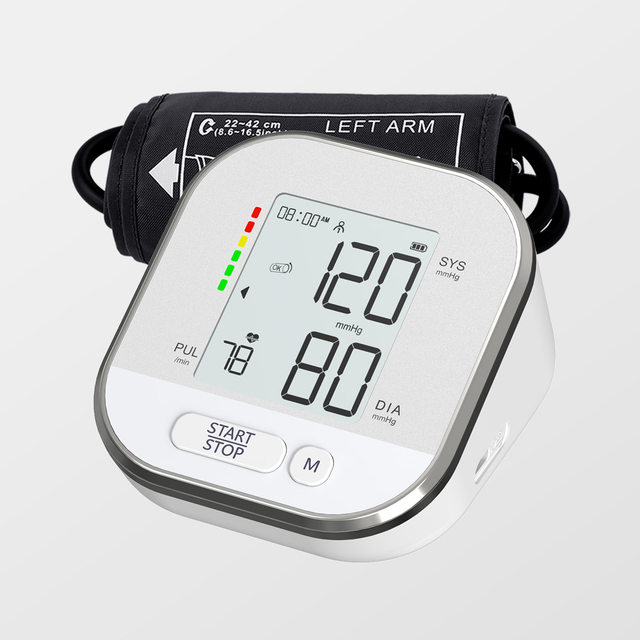
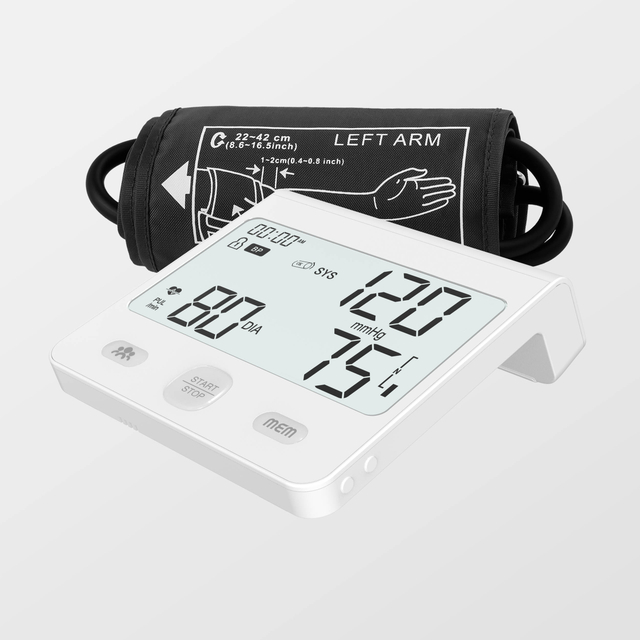
The Joytech Tubeless Arm Monitor integrates the cuff and monitor body into a one-piece structure. Its listed configuration includes a 4.2-inch display, two-user memory with 150 records per user, cuff-tightness and movement indicators, and optional Bluetooth, voice, backlight, and lithium-battery functions. This architecture may support compact packaging and differentiated online presentation while giving brands several configuration levels for market segmentation.
Conclusion
Understanding sphygmomanometer parts helps B2B buyers compare a blood pressure monitor as an integrated measurement system rather than a collection of visible features. Cuff coverage, pneumatic design, sensing, software, interface, power, documentation, and service planning should all match the intended channel and market. As a medical device manufacturer and supplier, Joytech Healthcare offers multiple upper-arm architectures and OEM/ODM configuration options. Distributors, healthcare brands, and e-commerce operators can contact Joytech to discuss model selection, customization requirements, samples, quotations, and cooperation terms.
FAQ
```
Q: What are the main parts of a digital blood pressure monitor?
A: Core parts include the cuff, air chamber, pump, valve, pressure sensor, processor, measurement algorithm, display, memory, power system, enclosure, and optional connectivity module.
Q: Why is cuff size important when sourcing a blood pressure monitor?
A: The supported cuff range affects user coverage and measurement conditions. Buyers should verify stated arm circumferences, optional cuffs, validation scope, connectors, and replacement availability.
Q: Does an automatic sphygmomanometer require a stethoscope?
A: No. An automatic oscillometric device uses a pressure sensor and algorithm to process cuff-pressure oscillations, while manual auscultatory equipment requires trained listening with a stethoscope.
Q: Which blood pressure monitor components commonly support product differentiation?
A: Cuff range, display size, memory capacity, voice prompts, backlight, rechargeable power, movement indicators, integrated-cuff construction, Bluetooth, and app functions can support different channel positions.
Q: What should distributors confirm before ordering an OEM model?
A: Confirm the exact configuration, certificates, validation scope, labeling, firmware, accessories, inspection plan, packaging, localization, change control, spare-part support, lead time, and destination-market requirements.