For distributors, brand owners, and private-label operators planning afingertip pulse oximeterprogram, most decisions feel settled early: sensor architecture, accuracy specification, certification pathway, packaging. The display is often treated as a cosmetic line item — until the first samples come back and the real trade-offs appear on the bench.
Display choice shapes far more than appearance. It determines what information the product can show, how readable it is in the lighting conditions where it will actually be used, how long the batteries last, what the unit costs, and how the product is perceived next to competitors on a shelf or an e-commerce listing. Choosing the wrong pulse oximeter display means a product that looks cheap at a premium price point, a BOM that cannot hit the target retail price, or a data-rich device whose added parameters are invisible to the user.
This article breaks down the three mainstream display options — OLED, LED, and segment LCD — and combines them with typical channel scenarios to give procurement and product teams a workable selection framework.
The Short Answer First: There Is No "Best" Display, Only the Right Match
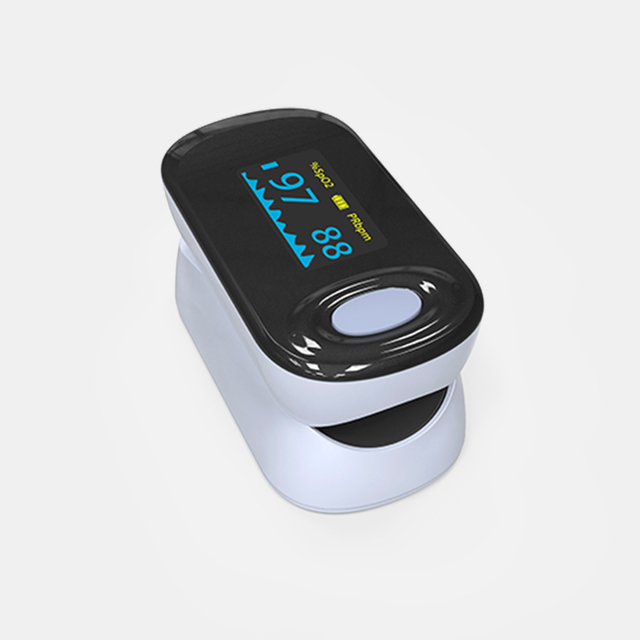
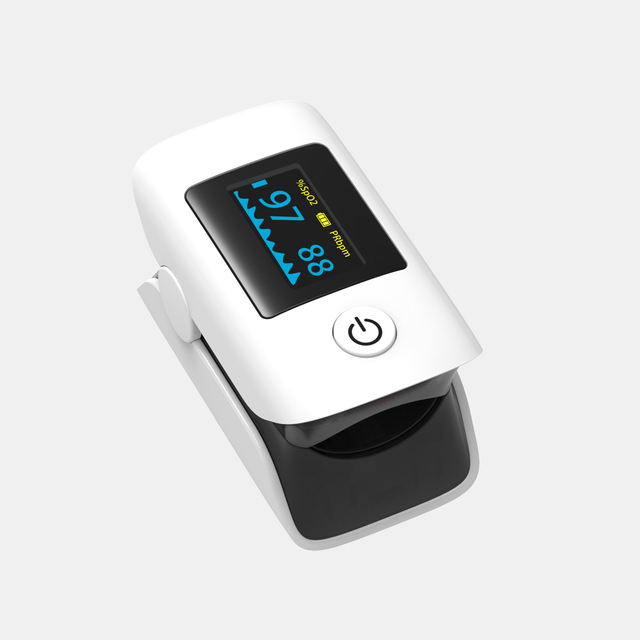
lOLED suits products positioned around rich information and a premium reading experience — waveform display, perfusion index (PI), multi-direction viewing, and strong performance in low-light environments;
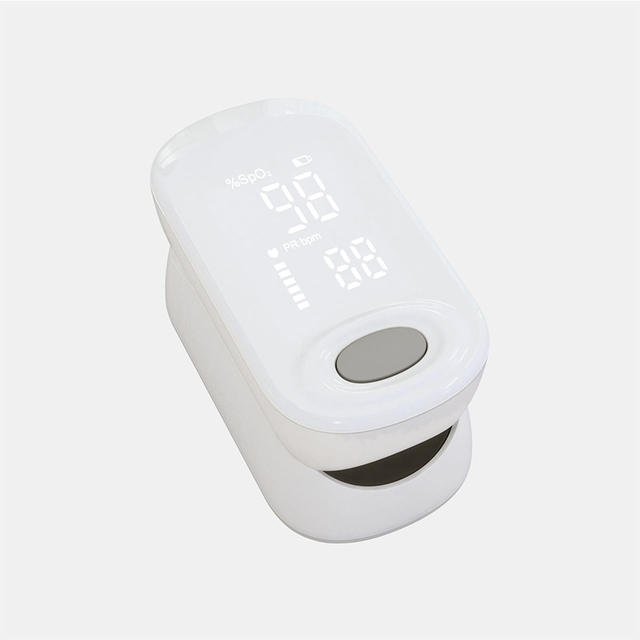
lLED suits entry-level and price-led retail SKUs where large, bright digits and a competitive unit cost decide the sale;
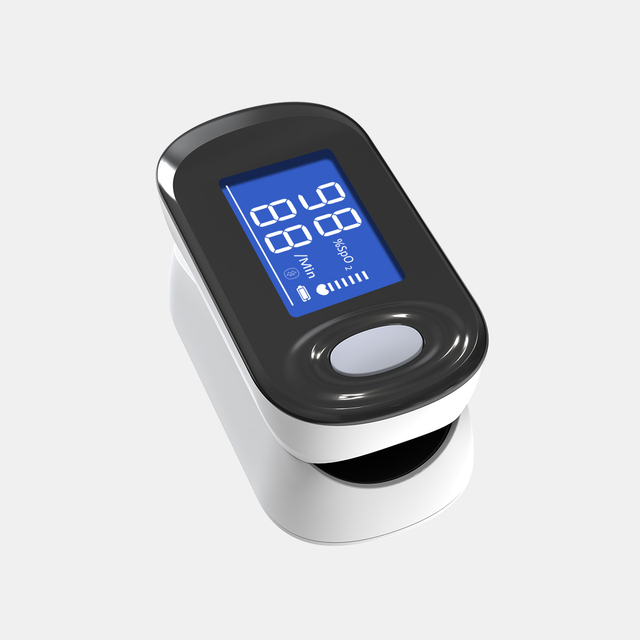
lSegment LCD suits basic home-care and promotional positions where the lowest power consumption, sunlight readability, and cost efficiency at volume matter most.
These options are not mutually exclusive. Many mature pulse oximeter product lines carry multiple display configurations, allowing brands to match the display to each channel position. Understanding the trade-off logic behind each option is the prerequisite for getting that mix right.
OLED: Built for Rich Information and Premium Positioning
What It Delivers
An OLED (organic light-emitting diode) display is self-emissive: each pixel generates its own light, with no backlight required. For an OLED pulse oximeter, this translates into several practical advantages.
First, information capacity. OLED modules render graphics as well as digits, which makes waveform display, pulse bar graphs, PI readings, and battery/perfusion indicators possible on a compact fingertip device. As multi-parameter monitoring (SpO₂, pulse rate, PI, and in some configurations respiratory rate estimation) becomes a mainstream differentiator, the display is where that added data becomes visible and sellable.
Second, reading experience. High contrast, wide viewing angles, and adjustable brightness make OLED legible across diverse lighting conditions — from dim bedrooms to bright clinical environments. Rotatable display directions allow two users sitting opposite each other to read the same measurement, a small feature that carries real weight in home-care and nursing scenarios.
Third, perceived value. A crisp dual-color OLED display photographs well for e-commerce detail pages and performs well in live demonstrations, both of which directly support mid-to-premium retail pricing.
Boundaries to Keep in Mind
The OLED module carries higher component cost than LED or segment LCD options, which needs to be planned into the BOM and target retail price. Emissive displays are also more power-hungry than passive segment LCDs, and direct-sunlight readability — where an emissive display competes against ambient light — is weaker than a reflective LCD. For products positioned on battery economy alone, or for outdoor-heavy use cases, these boundaries matter.
LED: The Workhorse of Entry-Level Fingertip Oximeters
What It Delivers
LED displays — typically seven-segment numerals in red or yellow-green — remain the backbone of the entry-level fingertip pulse oximeter market. The value proposition is straightforward: large, bright, high-contrast digits at a very low component cost, supported by a mature and stable supply chain.
For core SpO₂ and pulse rate monitoring, an LED display covers the essential job. The digits are instantly legible — including for elderly users, who make up a significant share of the home-monitoring population — and the high-brightness numerals perform well in live retail demonstrations. For price-led e-commerce listings and promotional channels, LED keeps the retail price aggressive while preserving the "medical monitoring" look buyers expect.
Boundaries to Keep in Mind
LED displays show numbers and a limited set of icons — no waveform, no graphic trends, no flexible data layout. A single display color also restricts information hierarchy. As product pages increasingly compete on multi-parameter features (PI, RR, waveform), an LED-only display can leave that added capability invisible at the point of sale. Perceived value is also capped: LED supports entry and mid-entry pricing, but rarely premium positioning.
Segment LCD: Lowest Power Draw, Strongest Sunlight Readability
What It Delivers
A custom segment liquid-crystal display is a passive technology: it typically consumes very little power compared with emissive displays. For a battery-powered fingertip device, this means extended operating life, fewer battery-related complaints, and a stronger position for markets where battery replacement cost and availability matter.
Segment LCDs are also reflective — they become more readable as ambient light increases. In bright retail environments, outdoor screening settings, and sunlit home use, a segment LCD often outperforms emissive displays on pure legibility. At volume, tooling amortization makes it the most cost-efficient option for a fixed, well-defined icon layout.
Boundaries to Keep in Mind
A segment display's content is fixed at layout design: the icon set is committed before tooling, and there is no dynamic graphics capability. Readability in darkness requires a backlight, which adds cost and erodes the power advantage. Aesthetically, segment LCDs read as "basic" — appropriate for home-care and institutional positions, but a constraint where premium look-and-feel drives the purchase.
Channel Matching: Display Recommendations by Sales Scenario
Technical characteristics become procurement decisions when placed in concrete channel scenarios:
Channel / Segment
Recommended Display Fit
Mid-to-premium e-commerce retail
OLED
Entry-level e-commerce, promotional and volume channels
LED
Pharmacy chains and offline professional channels
OLED or LED (large-digit demo effect)
Institutional screening, nursing and ward programs
OLED (multi-parameter, adjustable brightness) or segment LCD with backlight
Corporate wellness and gifting
OLED (perceived value, customization space)
Emerging markets and battery-economy-focused segments
LED or segment LCD
Two notes worth adding. In offline channels, the in-store demonstration carries significant weight — displays that read clearly across a counter (bright LED digits or high-contrast OLED) convert better. In institutional programs, confirm the usage lighting profile before locking the display: night-round use pushes toward adjustable-brightness OLED or backlit LCD, while daylight screening favors reflective segment LCD.
A Selection Checklist: Five Dimensions for Quick Alignment
In procurement and configuration discussions, brands and suppliers should align item by item across the following five dimensions:
lTarget user profile: Age structure, eyesight conditions, and the lighting environments of actual use determine readability priorities before anything else;
lInformation content: Define the data set first — SpO₂ and pulse rate only, or PI, respiratory rate estimation, waveform, and perfusion bar. The display must be able to show what the marketing claims promise;
lCost structure and price positioning: Match display cost to the target retail band; an OLED on an entry-price SKU is as mismatched as an LED on a premium one;
lBattery and power design: Runtime claims, battery type, and replacement cost in the target market all interact with the display's power profile;
lBrand perception and demo scenario: How the product will be photographed for listings, demonstrated in stores, and compared side-by-side with competitors.
Joytech's Pulse Oximeter OEM/ODM Platform: One Portfolio, Multiple Display Configurations
Joytech Healthcare's fingertip pulse oximeter range is designed to cover these display positions on a single product platform. The XM-103 Bluetooth fingertip pulse oximeter, for example, features a 0.96-inch dual-color OLED display with 360° rotatable viewing directions, five display modes, and adjustable brightness levels (1–5), presenting SpO₂, pulse rate, perfusion index, and waveform — with optional Bluetooth connectivity that syncs measurement data to the Joytech App for recording, analysis, and tracking. Multi-parameter configurations adding respiratory rate (RR) monitoring are available for partners targeting differentiated health-monitoring positions.
For brand owners and distributors, this means display configurations, parameter sets, appearance, and packaging can be aligned per channel within one OEM/ODM program — without splitting supply chain and certification management across multiple suppliers. All products are designed and manufactured under ISO 13485 quality systems, with regulatory and market-access support for different target markets, including CE MDR and US General Wellness Use applications, supported by 100+ R&D specialists and automated production across 260,000+ sqm of manufacturing footprint.
Market Outlook: The Display Is Where Added Value Becomes Visible
Multi-parameter pulse oximetry is moving from differentiation toward expectation across major markets. As SpO₂-only products compete increasingly on price, the commercial margin shifts to devices that show more — and the display is the interface through which that value is communicated to the buyer. In this shift, suppliers that can flexibly match display configurations to channel positions, and support them within a single certified platform, will hold the stronger position in channel negotiations and program tenders.
For brands and procurement teams planning an upcoming pulse oximeter program, the display decision is the right place to start that alignment.
Partner With Us
If your team is evaluating a pulse oximeter OEM/ODM program, we invite you to explore a partnership based on Joytech Healthcare's fingertip pulse oximeter platform — from single-SKU launches to multi-channel product line combinations, we can support you on display configurations, parameter sets, certification pathways, and customization.
To discuss display options, request category documentation, or arrange evaluation samples, contact our team at sale14@sejoy.com.
FAQ
Q1:What display options are available for Joytech pulse oximeters?
Joytech pulse oximeters are available with OLED, TFT and LED display options, depending on the model and product configuration. Buyers can select the display solution according to information requirements, product positioning and target market needs.
Q2:How do I choose the right pulse oximeter display solution for my channel?
Work through three questions in order. First, what must the screen show — SpO₂ and pulse rate only, or waveform, PI and other added parameters? Second, what retail band must the product hit, and what display cost can that band carry? Third, where will the product actually be used and demonstrated — a dim bedroom, a bright pharmacy counter, an outdoor screening point? The answers usually point to different displays for different channels, which is why most platforms carry more than one display configuration rather than a single "best" choice.
Q3:Can the display configuration be customized for an OEM/ODM program?
Yes. Display configuration, parameter set, appearance and packaging can be aligned per channel within one OEM/ODM program, so partners do not need to split supply chain and certification management across multiple suppliers. Customization scope and tooling requirements are confirmed against the target model and order volume during project discussions.