Connected blood pressure monitors are shifting from a premium feature to a standard expectation across product lines. For brand owners, distributors, and OEM/ODM buyers, the real decision point is often not whether to go connected, but how. Bluetooth, Wi-Fi, and 4G connectivity each involve trade-offs in cost structure, user experience, and data pathways—and different sales channels, from retail e-commerce and pharmacy chains to remote patient monitoring programs and eldercare providers, place different demands on the connectivity layer.
Choosing the wrong connectivity option can mean slow-moving inventory in the target channel, higher return rates, or a project delivered with a data pathway that fails to meet the customer's clinical workflow requirements. This article breaks down the technical characteristics and practical boundaries of the three connectivity options, and combines them with typical channel scenarios to give procurement and product teams a workable selection framework.
The Short Answer First: There Is No "Best" Option, Only the Right Match
·Bluetooth suits phone-centric, price-sensitive retail and e-commerce channels;
· Wi-Fi suits long-term home monitoring scenarios and chronic disease management programs that require data to move directly to the cloud;
· 4G suits elderly users, smartphone-independent use cases, and institution-wide deployments.
These options are not mutually exclusive. Many mature connected blood pressure monitor product lines offer multiple connectivity configurations, allowing brands to combine them flexibly by channel. Understanding the trade-off logic behind each option is the prerequisite for getting that combination right.
Bluetooth: The Cost-Effective Choice Built Around the Smartphone
How It Works and Where the Data Goes
A Bluetooth blood pressure monitor connects to a companion app on the user's smartphone. Measurement data transfers to the phone first, then uploads to the cloud platform via the phone's mobile network or Wi-Fi. The smartphone is an indispensable link in the data pathway.
For users, this means the phone needs to be nearby during measurement, and the app needs to be in a connectable state. For brands, it means a large part of the data experience sits in the quality of the app and cloud platform—beyond the measurement accuracy of the device itself, app usability and stability directly influence user retention.
Cost and Positioning Advantages
The hardware cost of a Bluetooth module is relatively low, with limited impact on the overall BOM. This makes Bluetooth the most easily accepted connected configuration for the mid-range retail market. For brands competing primarily through online channels—where price and feature lists drive conversion—Bluetooth delivers the "smart connected" selling point on the product page while keeping costs under control.
Boundaries to Keep in Mind
The typical shortcoming of Bluetooth lies in user-group fit. It assumes the user can comfortably complete the full sequence of downloading the app, registering an account, pairing the device, and maintaining the connection. For elderly users or people unfamiliar with smartphones, this flow can become a genuine usage barrier. In addition, data synchronization depends on the user actively opening the app. If the user forgets to sync after measuring, gaps appear in the data stream.
Wi-Fi: Built for Long-Term Home Monitoring
The Experience Advantage of Invisible Synchronization
A Wi-Fi blood pressure monitor uploads data directly to the cloud through the home router immediately after a measurement is completed—no phone required nearby, no manual action required. For chronic condition patients who measure once or twice a day at home, this "measure and it's uploaded" experience can meaningfully reduce data gaps.
From the perspective of remote patient monitoring (RPM) program operations, data completeness directly determines the clinical value and commercial viability of the program. When healthcare providers evaluate a chronic disease management program, one of the core metrics they examine is the continuity and completeness of data uploads. Wi-Fi typically provides a stronger guarantee on this front.
Practical Considerations Around Setup
The cost of Wi-Fi connectivity mainly appears at initial configuration. The device needs a one-time home Wi-Fi pairing process, and the user experience of this step varies by the manufacturer's provisioning approach—some require a long button press to enter pairing mode, others support app-guided one-touch configuration. Products with poor provisioning experiences tend to lose users on day one.
Wi-Fi also assumes a stable home network in the usage environment. This premise holds in most developed markets, but it may not be reliable in some emerging markets or special usage settings. Procurement teams should evaluate it against the actual conditions of the target channel.
4G: Smartphone-Free Connectivity, Live Out of the Box
The Shortest Possible User Path
A 4G blood pressure monitor has a built-in cellular module (typically paired with an IoT SIM card). The device connects as soon as it powers on, and measurement data uploads directly to the cloud over the cellular network. The user needs no smartphone, no pairing, no network setup—from unboxing to the first completed, uploaded measurement, the operational path is compressed to its minimum.
For elderly user groups, this shortest path is decisive. The core population for blood pressure monitoring skews older, and a significant share of that population is not fluent with smartphones. In channels dominated by these groups, "no phone required" is, by itself, a selling point with real penetration power.
The Other Side of the Ledger: Ongoing Operating Costs
The trade-off with 4G is the continuing communication cost. IoT SIM cards involve data plans, card management, and lifecycle operations. This cost is usually borne by the brand or channel partner and needs to be planned into product pricing and project budgets in advance. On the hardware side, the cellular module also adds some BOM cost and brings certification requirements—different target markets have different network-access certifications for cellular devices.
Viewed from another angle, though, that cost buys a fully controllable data pathway: data never passes through the user's phone, upload behavior does not depend on user action, and it does not depend on the user's home network. For programs whose core business model is data services—such as chronic disease management services billed on a data subscription basis—this level of determinism carries direct commercial value.
Channel Matching: Connectivity Recommendations by Sales Scenario
Technical characteristics only become procurement decisions when placed in concrete channel scenarios. The following analysis covers each typical channel.
Pharmacy Chains and Offline Professional Channels
In offline channels, staff recommendations and in-store demonstrations carry significant weight. The product needs to perform reliably in a live "ready to use" demo. Both Wi-Fi and basic Bluetooth configurations can serve this scenario. Where the store's customer base skews older, introducing a 4G configuration as a higher-ticket differentiated option works well, with messaging centered on "no phone needed—measure and upload the moment it powers on."
Offline channels should also pay attention to the quality of printed guidance materials inside the box—elderly users rely far more on paper instructions than on QR codes.
This is the channel with the strictest data pathway requirements. Program buyers are not purchasing a single device; they are purchasing a complete data pipeline running from home measurement to clinical workflow. In this scenario, a combination of Wi-Fi and 4G is usually the safer choice: Wi-Fi covers core users with home networks, while 4G covers users without networks or without smartphones—together they safeguard data upload completeness.
Procurement teams in this channel should specifically confirm: whether device data can integrate with the program platform (API or data format), whether upload frequency and latency meet the clinical workflow, and whether the solution complies with medical data regulations in the target market.
Eldercare Institutions and Home Care Service Providers
The institutional scenario is defined by devices being managed centrally by care staff or service providers—individual users do not participate in connectivity operations. 4G has a clear advantage here: no per-device network provisioning at deployment, no dependence on the institution's Wi-Fi coverage, and device relocation (such as a resident changing rooms or going out temporarily) does not interrupt data transmission. The scale economics of bulk deployments should be modeled together with the SIM card's annual data costs.
Corporate Wellness and Gifting Channels
Corporate buyers value "zero-friction delivery" and brand customization space. Connectivity choice is comparatively less sensitive in this channel. Mid-to-high configurations with Wi-Fi or Bluetooth, paired with customized appearance and packaging, usually meet the requirement. If the target workforce includes purchase-for-parent use cases, keeping a 4G option in the product mix is worthwhile.
Emerging Markets and Infrastructure-Limited Regions
In markets with limited household broadband penetration, the premise for Wi-Fi does not hold, while Bluetooth is constrained by smartphone penetration and app localization quality. 4G is often the only reliable connected pathway in these markets. Notably, in many markets where fixed infrastructure arrived late, cellular coverage is actually better than fixed broadband—which further amplifies the relative advantage of the 4G option.
A Selection Checklist: Five Dimensions for Quick Alignment
In concrete procurement and configuration discussions, brands and suppliers should align item by item across the following five dimensions:
1. Target user profile: The age structure, smartphone fluency, and home network conditions of the user base directly determine connectivity priority;
2. Channel sales model: Self-decision retail channels and project-based B2B channels weight "out-of-box experience" and "data completeness" entirely differently;
3. Data pathway ownership: Whether data passes through the user's phone or goes directly to the cloud involves data completeness, compliance boundaries, and business model design;
4. Total cost structure: Look beyond unit price—model the full cycle including cellular fees, cloud platform costs, and after-sales support;
5. Certification and compliance pathways: Wireless devices involve radio and network-access certifications across markets; a change in connectivity configuration can affect certification scope and time-to-market.
Joytech's Connected Blood Pressure Monitor Portfolio: One Platform Covering All Three Pathways
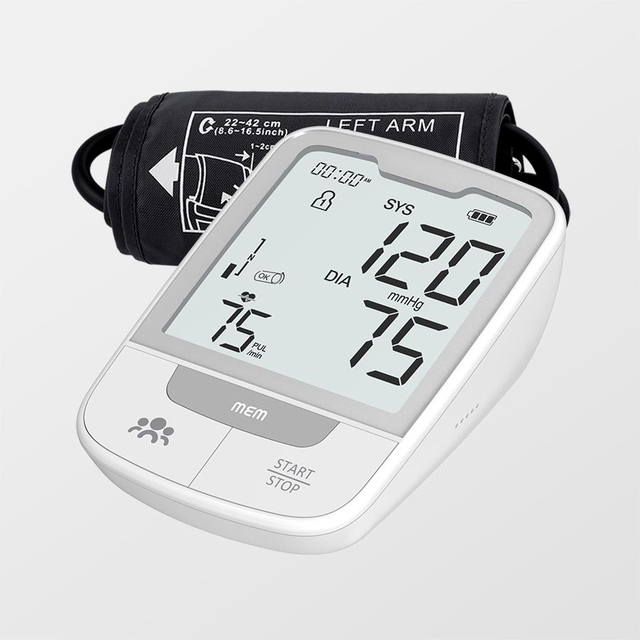
Joytech Healthcare's DBP series connected blood pressure monitors are designed to cover Bluetooth, Wi-Fi, and 4G configurations, paired with a companion mobile application that transmits measurement data to compatible platforms where it can be stored, managed, and reviewed by authorized users.
For brand owners and distributors, this means multiple connectivity configurations can be combined on a single product technology platform, matched to different channel positions—without splitting supply chain and certification management across multiple suppliers. Joytech supports OEM/ODM partnership models covering branding, packaging, and product configuration, and partner teams can work with Joytech's R&D team to align on connectivity specifications and regulatory pathways for target markets.
For channel partners planning a connected product line, this "one platform, multiple connectivity configurations" structure helps reduce SKU management complexity, shortens time-to-market for new launches, and preserves the flexibility to adjust configuration mixes based on market feedback.
Market Outlook: Connectivity Is Becoming a Baseline Item in Channel Negotiations
Penetration of connected blood pressure monitors continues to deepen across major markets. Healthcare systems' growing emphasis on out-of-clinic data, and chronic condition patients' expectations for data visibility, are pushing connectivity from a differentiator toward a baseline expectation for product lines. In this shift, suppliers that can flexibly match connectivity options by channel and provide supporting data services will hold the stronger position in channel negotiations and program tenders.
For brands and procurement teams, now is a reasonable moment to map your channel structure and define a connectivity selection strategy for each channel.
Partner with Us
If your team is evaluating the layout of a connected blood pressure monitor product line, we invite you to explore a partnership based on Joytech Healthcare's DBP series—from single-channel pilots to multi-market product line combinations, we can support you on connectivity configurations, certification pathways, and OEM/ODM customization.
To learn how the DBP series and its accompanying app ecosystem can support your product roadmap, reach out to our team at sale14@sejoy.com.