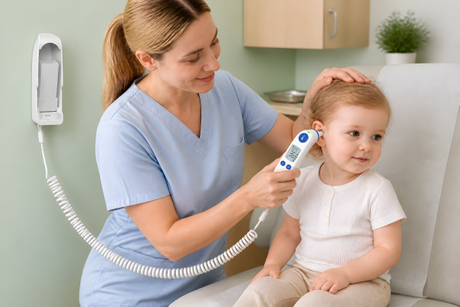
Consumer health behavior is moving past the single-use mindset. Where a thermometer once served one purpose—measure, read, set aside—buyers now expect continuity. They want to see how a fever developed over several days, compare readings across family members, or review seasonal patterns that help them understand their household’s health baseline. Devices that offer this kind of continuity tend to hold a stronger position in the user’s routine. Those that don’t may find it harder to stand out in an increasingly crowded category.
For distributors, this behavioral shift is relevant to product selection. A CE MDR digital thermometer with app connectivity sits in a different part of the market than a standalone device. It moves from a commodity category—where the main variable is price—into one where ongoing utility becomes part of the product experience. That distinction is one reason app-connected lines are receiving more attention from distributors.
Why Margin Pressure Is a Structural Problem—and How App Ecosystems Address It
The thermometer category has long been defined by price competition. Product specifications converge, sourcing options multiply, and retail partners push for lower wholesale costs. For distributors operating in this environment, the question of how to position products beyond price is a recurring one. App-connected thermometers introduce a different dynamic across four areas:
From Commodity Positioning to Premium Health Tool
A thermometer without app connectivity competes on a narrow set of attributes: accuracy, speed, and price. An app-connected thermometer competes on a broader set—temperature trend tracking, family health records, and long-term wellness visibility. That broader set of features gives retailers a reason to position the product differently on the shelf. Retail partners who have stocked app-connected health devices in other categories have generally seen interest from buyers who value ongoing functionality alongside cost considerations.
From Retail-Only Distribution to Institutional Channel Access
Consumer retail is the default channel for thermometers, and it is also the most competitive. App connectivity, however, introduces relevance to institutional buyers—clinics, diagnostic centers, eldercare facilities, daycare operations, and corporate wellness programs—who need multi-user temperature tracking and centralized data management. These institutional orders typically involve larger volumes and longer purchasing cycles than retail equivalents. For distributors looking to broaden their channel mix, this is an additional avenue to consider.
From One-Time Transactions to Ongoing Product Engagement
When a customer begins recording temperature data through an app, they build a personal health record over time—readings for multiple family members, patterns during illness, recovery timelines. That accumulated record becomes part of how they use the product. Moving to a different brand would mean starting over: new app, new interface, no historical context. This is a dynamic that may encourage continued use of the same platform and the same product line.
From Price-Based Competition to Ecosystem-Based Positioning
When the product experience extends beyond hardware into software, data storage, and ongoing engagement, the basis of comparison between products shifts. A competitor can match a thermometer’s specifications. Replicating an integrated app ecosystem—with synchronized data, historical tracking, and secure local storage—requires significantly more investment and development. That difference is relevant for distributors considering how to position their offerings in a crowded market.
How App Functionality Addresses These Challenges
The four areas outlined above each connect to a specific app capability:
App connectivity gives distributors additional ways to present products beyond hardware specifications, enabling a conversation at the point of sale that includes functionality, data tracking, and user experience.
Long-term data tracking and multi-user management make the product relevant to institutional buyers—healthcare facilities, eldercare providers, corporate wellness programs—who need ongoing temperature records rather than single-use measurements.
Accumulated user data in the app creates a personal health archive tied to the platform. The longer someone uses it, the more their records are built within it, which may factor into their decision at the point of repurchase.
The combination of app integration, local data storage, and historical tracking adds a functional layer that a standalone thermometer does not offer, giving distributors a broader set of features to present.
These capabilities are available across Joytech’s CE MDR-certified digital and infrared thermometer lines—the 4735B, 4760B, and DET series.
CE MDR Digital Thermometer Product Lines: App-Connected Options Across Form Factors
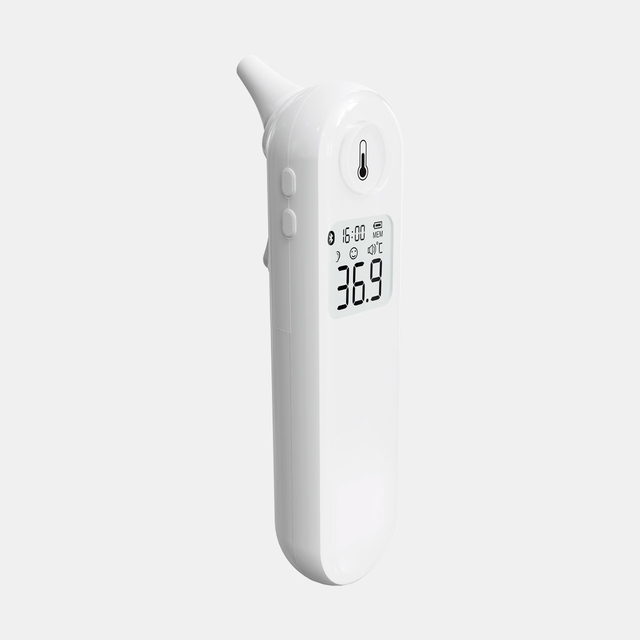
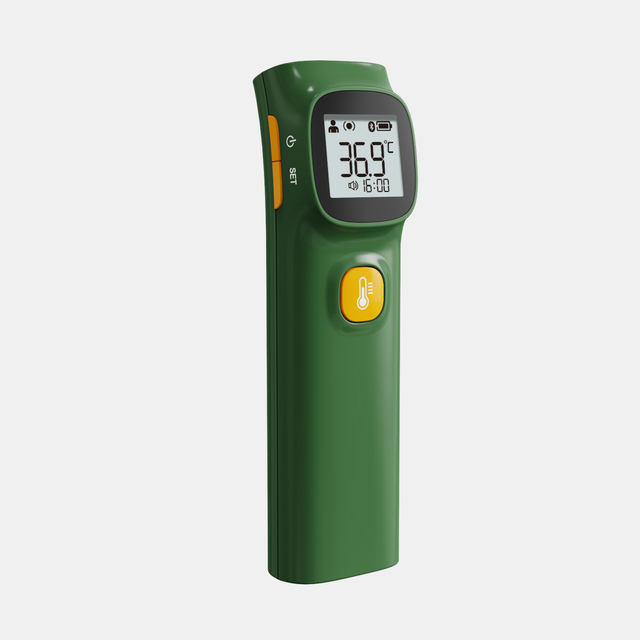
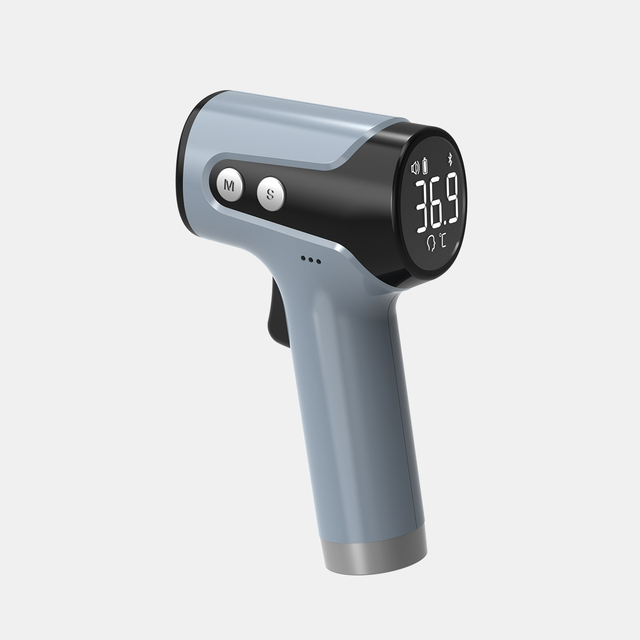
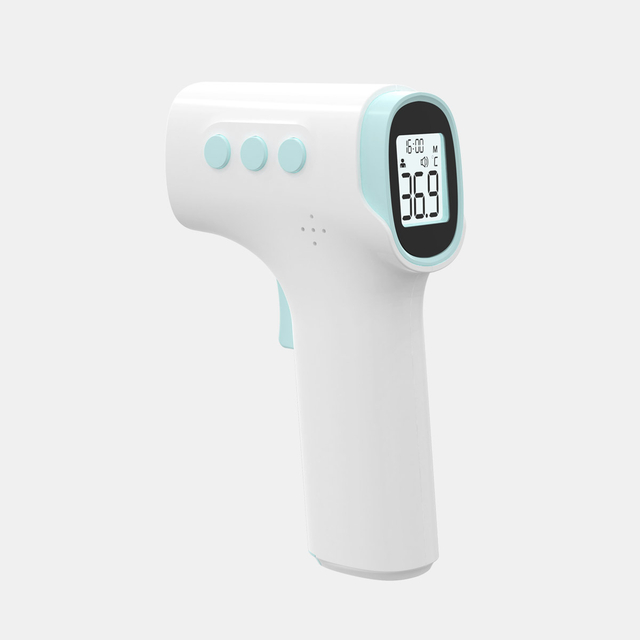
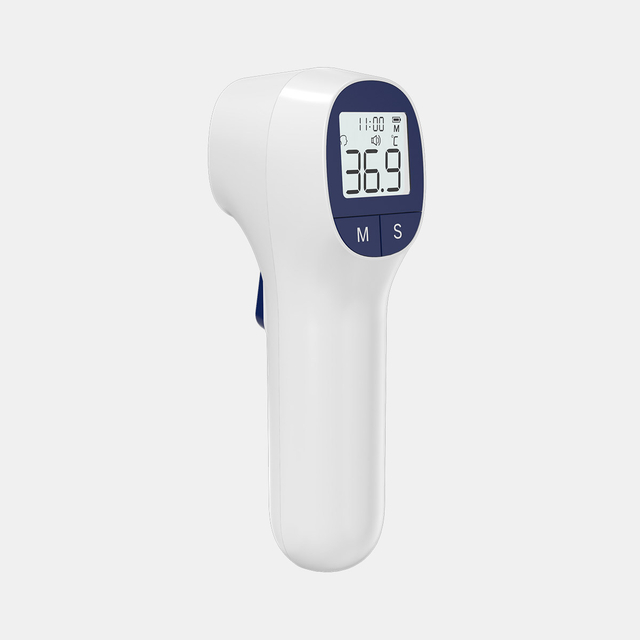
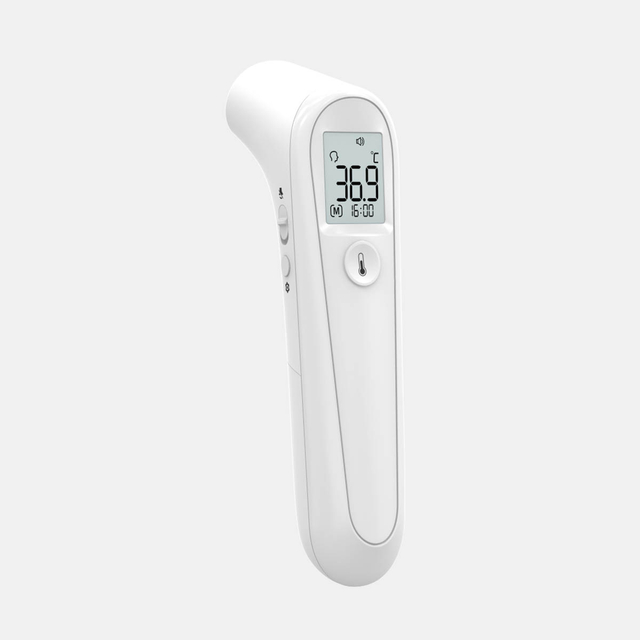
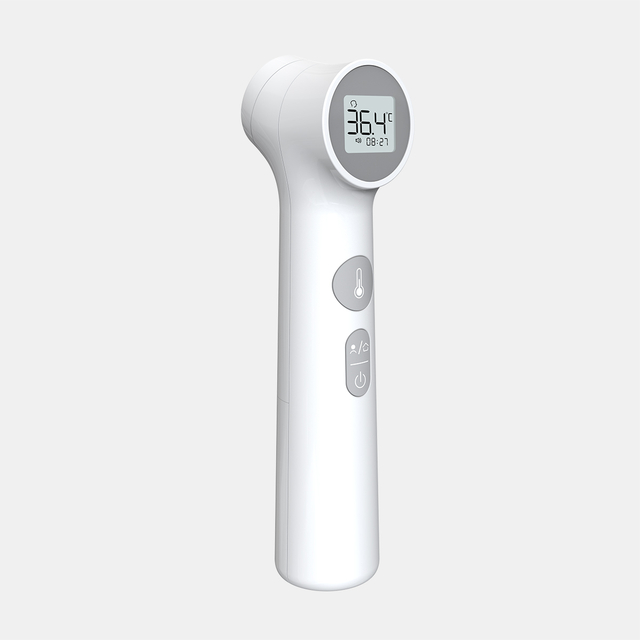
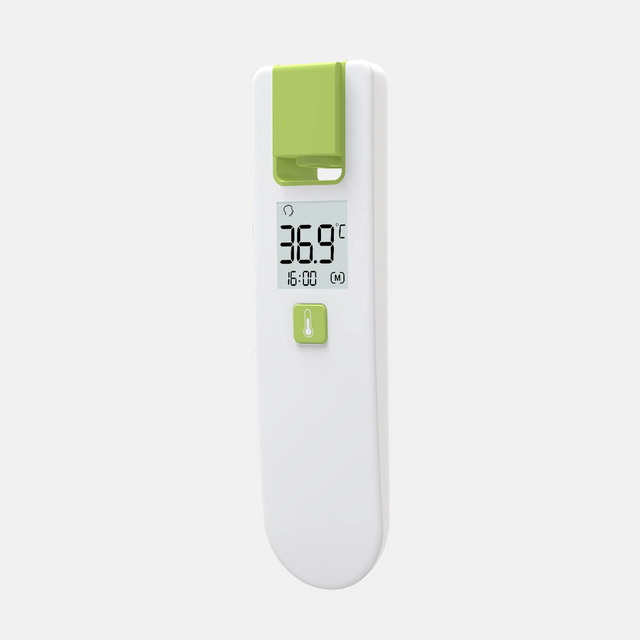
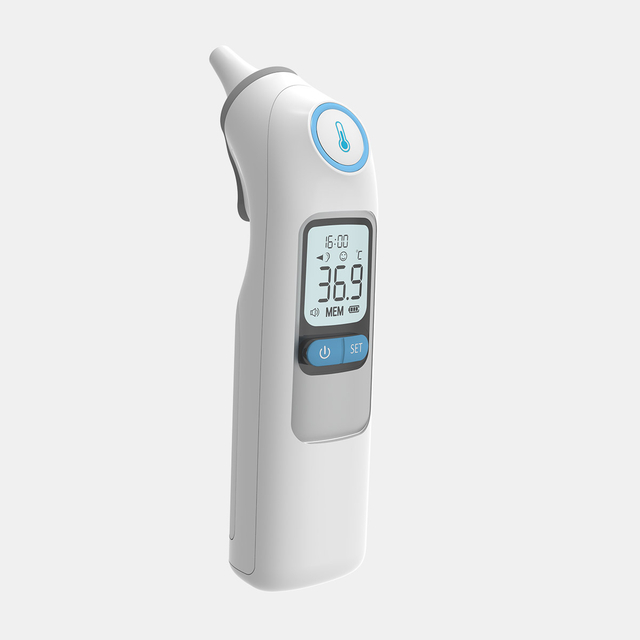
Joytech’s app-connected thermometer range—the 4735B, 4760B, and DET series—shares the same core app ecosystem: real-time data synchronization, historical trend tracking, and secure local storage. The difference between models is in form factor and use context, not in app capability:
4735B & 4760B (Digital) — The home health tracking entry point. Users measure, the app records, and over time a family health archive gradually takes shape. For distributors, this product introduces a functional narrative beyond basic temperature measurement.
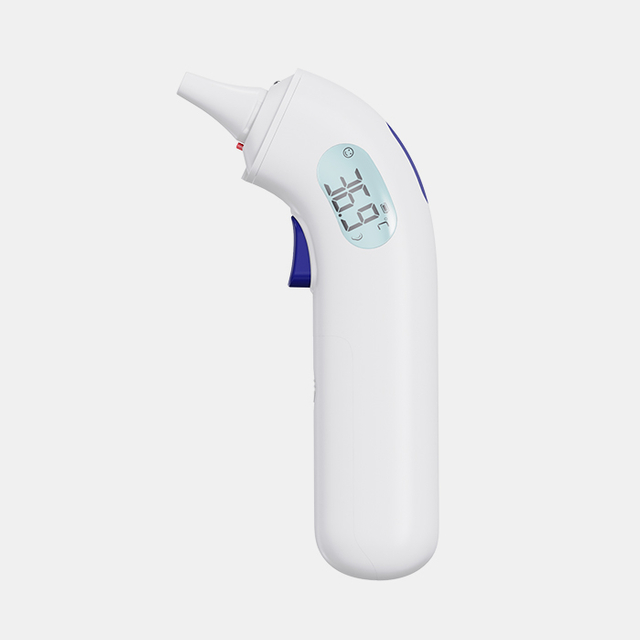
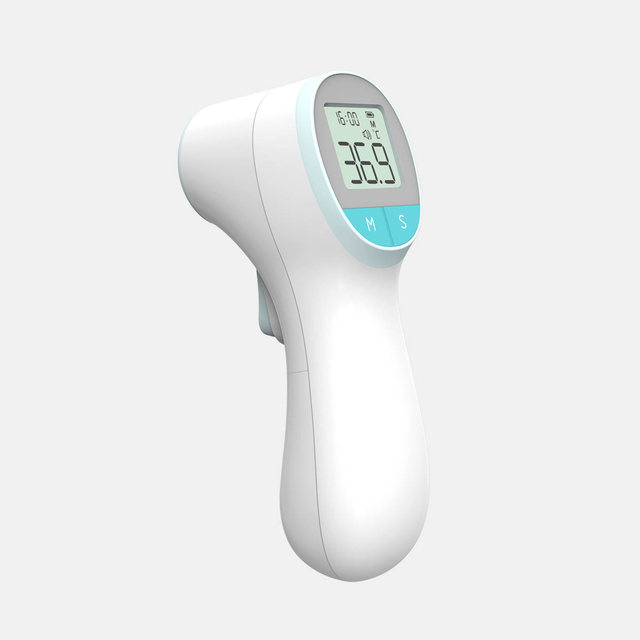
DET Series (Infrared — ear, forehead, or dual) — One-second readings, no contact required, same app ecosystem. This line has particular relevance to institutional buyers—clinics, eldercare, daycare—where multiple individuals need tracking within one centralized platform.
Both lines feed into the same app. A family that starts with a 4735B for home use and later adds a DET for travel continues within the same data record and the same brand environment.
Readings appear on the user’s phone within seconds of measurement, and multiple devices—digital and infrared—feed into one unified record. A simpler setup experience reduces the learning curve for new users and minimizes the need for post-purchase guidance.
Comprehensive History Tracking
The app maintains a complete temperature history with trend visualization and timeline views. This moves the product experience beyond a single measurement event. Users who revisit the app to check trends or review family records maintain an ongoing interaction with the platform—a usage pattern that is distinct from traditional thermometers, which are typically used once and stored away.
Secure Local Data Storage
All temperature data is encrypted and stored securely on the user’s device. Users retain full ownership of their health records—no third-party sharing or external data access is involved. In a market where health data privacy is increasingly part of the purchasing conversation, this privacy-first approach provides a concrete feature for distributors to reference—particularly with institutional buyers who need to demonstrate responsible data handling to their own stakeholders.
Together, these capabilities extend the product offering beyond the device itself. Distributors presenting these thermometers can reference app functionality, data tracking, and privacy features as part of the product’s overall specification set.
OEM Flexible Digital Thermometer Manufacturer: Capabilities That Support Distributor Growth
Certification and Compliance Foundation
All thermometer lines carry CE MDR (EU 2017/745, Notified Body 0123) certification. The 4735B and 4760B hold FDA 510(k) clearance for the U.S. market. Behind these product-level certifications stands ISO 13485 company-wide quality management certification, giving distributors regulatory clarity across target markets.
Manufacturing Scale and Supply Reliability
With 260,000+ square meters of production capacity, 100+ R&D specialists, and 100+ patents, Joytech is positioned to support distributors at every stage—from initial pilot orders to full-scale national rollouts. Exports to 150+ countries reflect a supply chain that has been tested across diverse regulatory environments and logistical requirements.
OEM/ODM Customization
Beyond standard product lines, Joytech supports OEM/ODM partnerships—custom branding, modified app interfaces, private-label packaging, and specialized SKU configurations. This flexibility allows distributors and brand owners to configure offerings tailored to specific retail partners, institutional clients, or regional market requirements.
Next Steps
The thermometer market is shifting from single-use measurement toward connected health management. Distributors interested in aligning their product portfolios with this shift can explore the options available across Joytech’s CE MDR digital and infrared thermometer lines—backed by a unified app platform, manufacturing depth, global certifications, and OEM/ODM flexibility.
Whether you’re looking to source app-connected digital thermometers for your retail channels, expand into institutional markets with infrared options, or explore OEM/ODM configurations tailored to your brand, reach out to learn more about product availability, MOQ structures, and partnership terms.
What connectivity method does the thermometer use to sync with the app?
The 4735B, 4760B, and DET series use Bluetooth to connect with the companion app. Once paired, temperature readings sync automatically—no manual data entry or additional hardware required.
What are the MOQ requirements for app-connected thermometer lines?
MOQ structures vary depending on product configuration and whether standard or OEM/ODM customization is involved. Contact our sales team at sale14@sejoy.com for specific MOQ details tailored to your order requirements.
Where is user health data stored?
Temperature data is transmitted from the device to the companion app through a proprietary Bluetooth protocol and is stored locally on the user's device. According to the app information, collected data is not uploaded to cloud servers.