Population aging is no longer a demographic footnote — it is the structural backdrop of the home health device market. Across major markets, the population aged 65 and over keeps expanding, chronic conditions such as hypertension, cardiovascular disease, and COPD concentrate heavily in this age group, and adult children increasingly purchase monitoring devices for their parents. For brand owners, distributors, and OEM/ODM buyers, this shift creates a commercial question that few product lines are currently built to answer: what does a home health monitoring devices for seniors program actually require — not one device designed for everyone, but a coherent senior health monitoring device bundle shaped by genuine age-friendly design?
The common failure mode in the market today is accidental. Brands source a blood pressure monitor from one supplier, a pulse oximeter from another, and a thermometer from a third — each product individually sound, but the combined experience fails the senior household: small displays, app-dependent connectivity, inconsistent button logic, and three different instruction manuals in three different type sizes. The bundle sells on paper and confuses in the living room.
This article breaks down what aging populations actually demand from home health devices, the design principles that decide whether a product is truly senior-ready, and how procurement and product teams should think about assembling device combinations for silver-economy channels.
Why the Silver Economy Is Rewriting the Requirements for Home Health Monitoring Devices for Seniors
The senior market differs from the general home health market in three structural ways, and each one changes what buyers should specify.
First, the primary user is often not the buyer. A large share of senior devices are purchased by adult children, care services, or institutional procurement — not by the end user. This splits the value proposition in two: the buyer evaluates connectivity, data sharing, and brand credibility, while the end user evaluates whether the device is actually usable day after day. A product that photographs well on an e-commerce listing but defeats a 78-year-old at the kitchen table generates returns, not retention.
Second, the user profile concentrates exactly where general-purpose design is weakest. Reduced near vision, reduced fine motor control, reduced hearing, and limited smartphone fluency are not edge cases in this segment — they are the median. Features that mainstream marketing treats as conveniences (app pairing, touchscreen menus, small multi-function buttons) become barriers for the core user base. The connectivity layer follows the same logic: as analyzed in our article on how channels should choose connected blood pressure monitor solutions, smartphone-dependent Bluetooth pathways assume a user can download an app, register an account, and maintain a pairing — an assumption that fails precisely where blood pressure monitoring is most needed.
Third, chronic disease management is a multi-device reality. Hypertension management alone may involve a blood pressure monitor; overlapping cardiovascular and respiratory conditions add pulse oximetry; seasonal illness adds thermometry and, for respiratory patients, nebulization therapy. Seniors with two or more chronic conditions — the fastest-growing cohort in every aging market — do not experience these as separate product categories. They experience one daily health routine that happens to involve four devices.
This is why the senior health monitoring device bundle is emerging as a distinct merchandising and program unit: not a marketing gift set, but a designed combination in which every device meets the same usability standard and the whole tells one coherent story to the household.
Age-Friendly Design: Six Principles That Separate Senior-Ready Products From Repositioned Generic Ones
Genuine age-friendly design is specific and testable. When evaluating products for a senior-focused program, procurement teams should assess six dimensions:
1. One-Button and Near-Zero-Decision Operation
The operational path from picking up the device to a completed, readable measurement should involve one decisive action. Models such as portable one-button wrist blood pressure monitors compress the entire measurement flow into a single press — no mode selection, no menu navigation. Every additional decision point in the flow is a dropout point for users with declining cognitive or motor capacity.
2. Display Legibility Before Feature Density
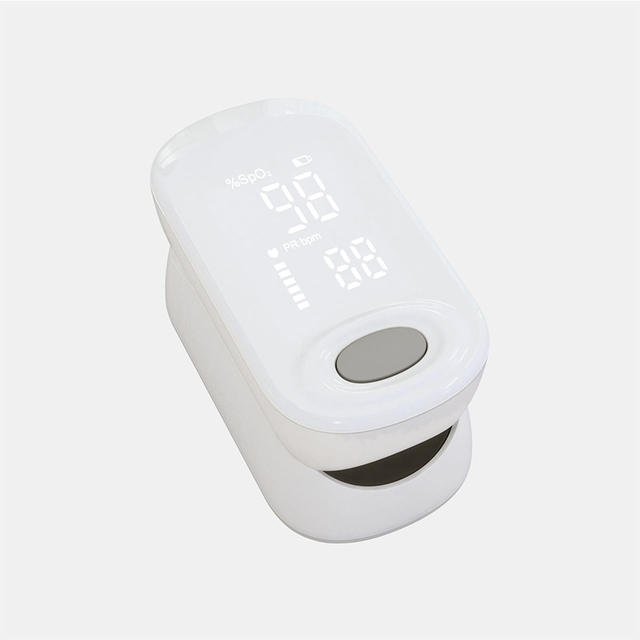
For senior users, display choice is not a cosmetic decision. Large, high-contrast digits outperform information-rich layouts; brightness that works in a dim bedroom matters as much as performance under bright light. Our analysis of pulse oximeter display optionsapplies with double force in this segment: large bright LED digits remain instantly legible for elderly users, while adjustable-brightness, 360° rotatable OLED displays serve users reading a measurement together with a caregiver sitting opposite.
3. Smartphone-Independent Connectivity
If a connected program targets seniors, the data pathway cannot assume a smartphone. 4G-enabled monitors connect as soon as they power on and upload measurements directly to the cloud — no phone, no pairing, no network setup. For the elderly user base, "no phone required" is not a convenience feature; it is the difference between a functioning data stream and a disconnected device.
4. Guidance Built Into the Device Itself
Age-friendly products move error prevention from the manual into the hardware: cuff-tightness and cuff-loose indicators, movement and arm-shake warnings, irregular-heartbeat prompts, and WHO blood-pressure classification indicators that translate a number into a color-coded reading the user can act on. These features correct the most common measurement errors seniors make — and they do it at the moment of error, not afterward.
5. Accommodation of Real Bodies
Standard cuffs do not fit every senior arm. Support for extra-large cuff options, wrist formats for users with limited upper-arm mobility or larger builds, and comfortable cuff materials are procurement-level requirements in this segment, not accessories.
6. Paper-First Instruction Design
In senior-heavy channels, printed guidance materials inside the box carry more of the onboarding burden than QR codes and apps. Font sizes, illustration-driven step sequences, and quick-start cards decide whether the device is used correctly on day one. Bundle programs should hold every component to a single, senior-tested documentation standard.
From Single Devices to a Senior Health Monitoring Device Bundle: The Combination Logic
A well-constructed senior bundle mirrors the daily health routine of an aging household. A typical core combination:
·An elderly blood pressure monitor as the anchor device. Hypertension is the most prevalent monitored condition among seniors, and an upper-arm monitor with measurement-during-inflation technology, integrated error indicators, and optional 4G connectivity anchors both the clinical value and the data stream of the bundle. Six Joytech DBP Plus upper-arm models have received FDA 510(k) clearance, a credibility marker that matters in senior channels where buyers scrutinize regulatory status closely.
·A fingertip pulse oximeter for cardiovascular and respiratory visibility. SpO₂ and pulse rate readings add a second daily signal for seniors with cardiac or respiratory conditions. Large-digit or rotatable-display configurations keep the device inside the same usability standard as the blood pressure monitor.
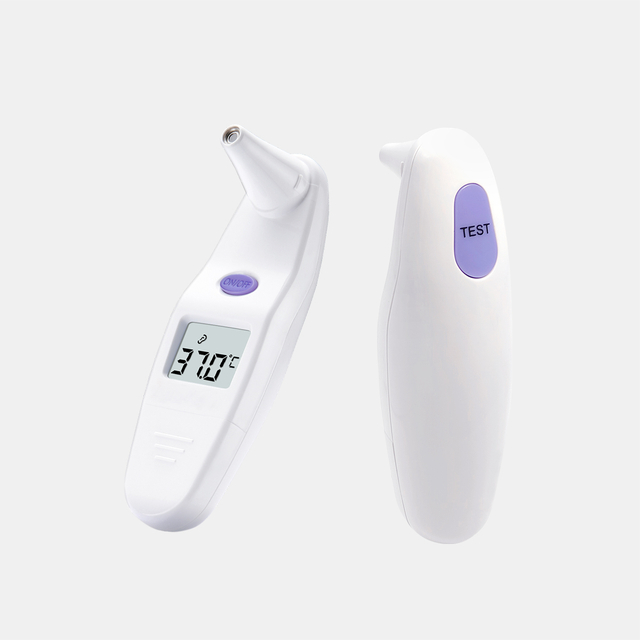
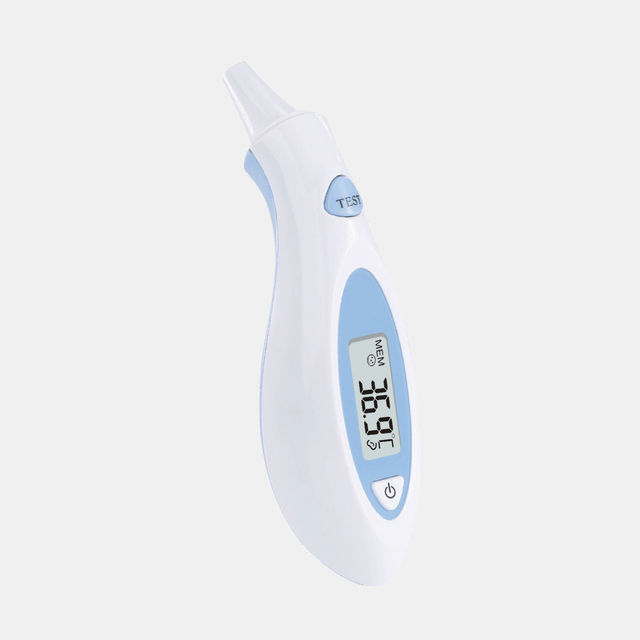
·A thermometer as the seasonal essential. Older adults run higher risks during fever episodes, making fast, easy temperature measurement a staple of the senior household — in practice, the highest-frequency device in the bundle.
·A nebulizer where respiratory conditions are in scope. For COPD and asthma populations, nebulization therapy is a routine rather than an emergency, and bundling a quiet, easy-to-operate nebulizer extends the program from monitoring into therapy support.
The bundle logic is not "more SKUs" — it is one usability standard applied across a coherent routine, sourced so that connectivity, documentation, and design language are consistent. That is what turns four devices into one program, and it is what a single-platform supplier can deliver that a multi-supplier patchwork cannot.
Joytech's Platform: One OEM/ODM Partner for Senior-Focused Product Lines
Joytech Healthcare maintains a home health device portfolio that maps directly onto the senior bundle: upper-arm and wrist blood pressure monitors — including 4G-connected and FDA-cleared configurations with integrated measurement guidance — fingertip pulse oximeters in multiple display options, digital and infrared thermometers, and nebulizer platforms, all designed and manufactured in-house under ISO 13485 quality systems.
For brand owners and distributors building a senior-focused program, the practical advantage is coherence: a single OEM/ODM partnership can align display choices, button logic, connectivity configurations, cuff options, documentation standards, and packaging across every device in the bundle — with one certification management pathway and one supply chain, rather than four. Joytech supports customization across branding, packaging, and product configuration, backed by 100+ R&D specialists and automated production across 260,000+ sqm of manufacturing footprint.
Market Outlook: Age-Friendly Design Is Becoming a Baseline, Not a Niche
Every major market is aging, and every distribution channel that touches the silver economy is recalibrating around it. Regulators, insurers, and healthcare systems are pushing more monitoring into the home; the households receiving that monitoring are increasingly the ones least served by generic consumer-electronics design conventions. In this shift, brands that treat age-friendly design as a core specification — and structure their senior offerings as coherent device bundles rather than ad-hoc SKU assemblies — will hold the stronger position in channel negotiations, care-provider partnerships, and the gift-for-parents retail moment that recurs every season.
For procurement and product teams planning a senior-focused line, the bundle architecture is the right place to start.
Partner With Us
If your team is evaluating a senior health device program, we invite you to explore a partnership based on Joytech Healthcare's home health monitoring platform — from single-SKU launches to complete senior health monitoring device bundles, we can support you on age-friendly design requirements, connectivity configurations, certification pathways, and OEM/ODM customization.
To discuss bundle configurations, request category documentation, or arrange evaluation samples, contact our team at sale14@sejoy.com.